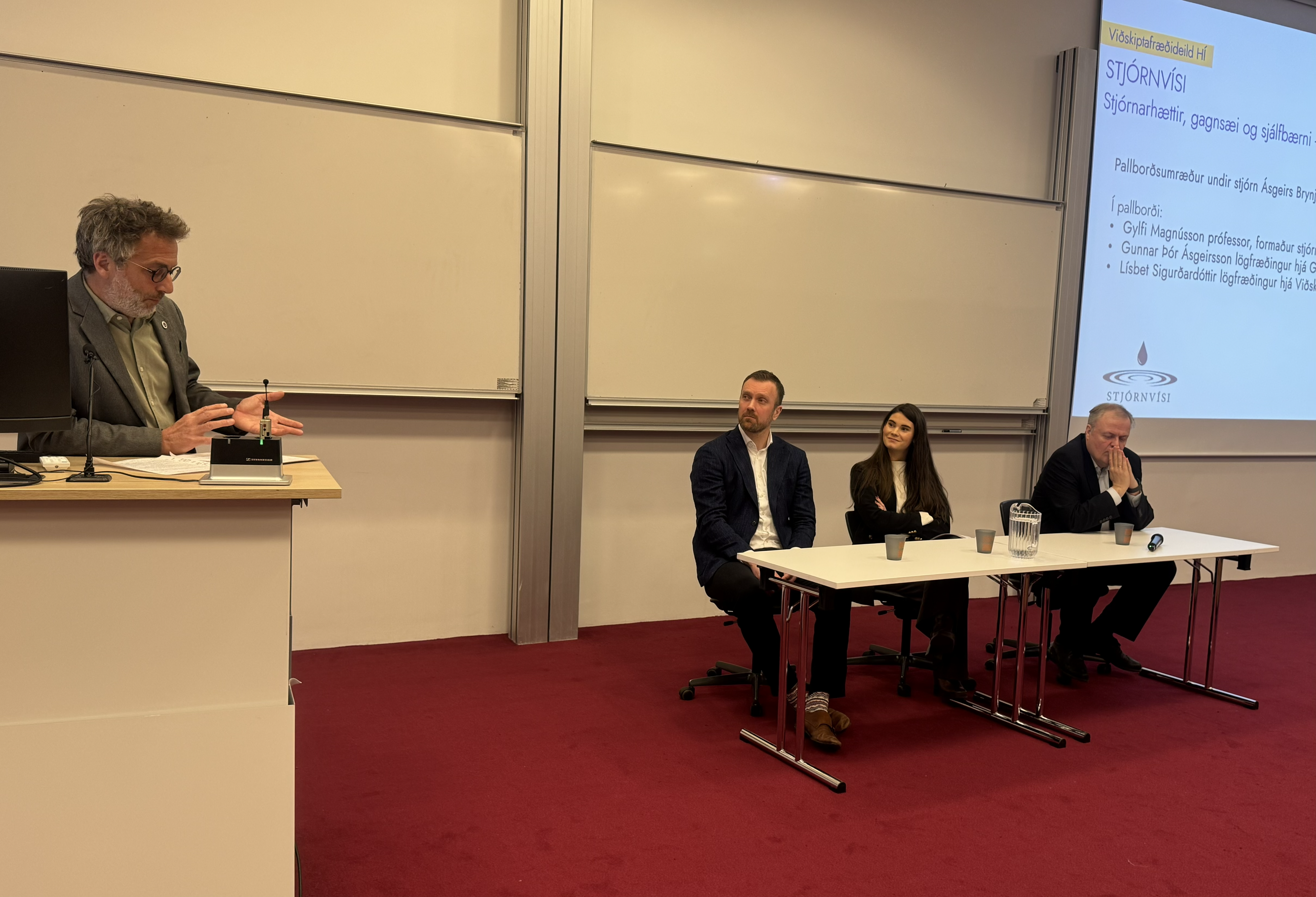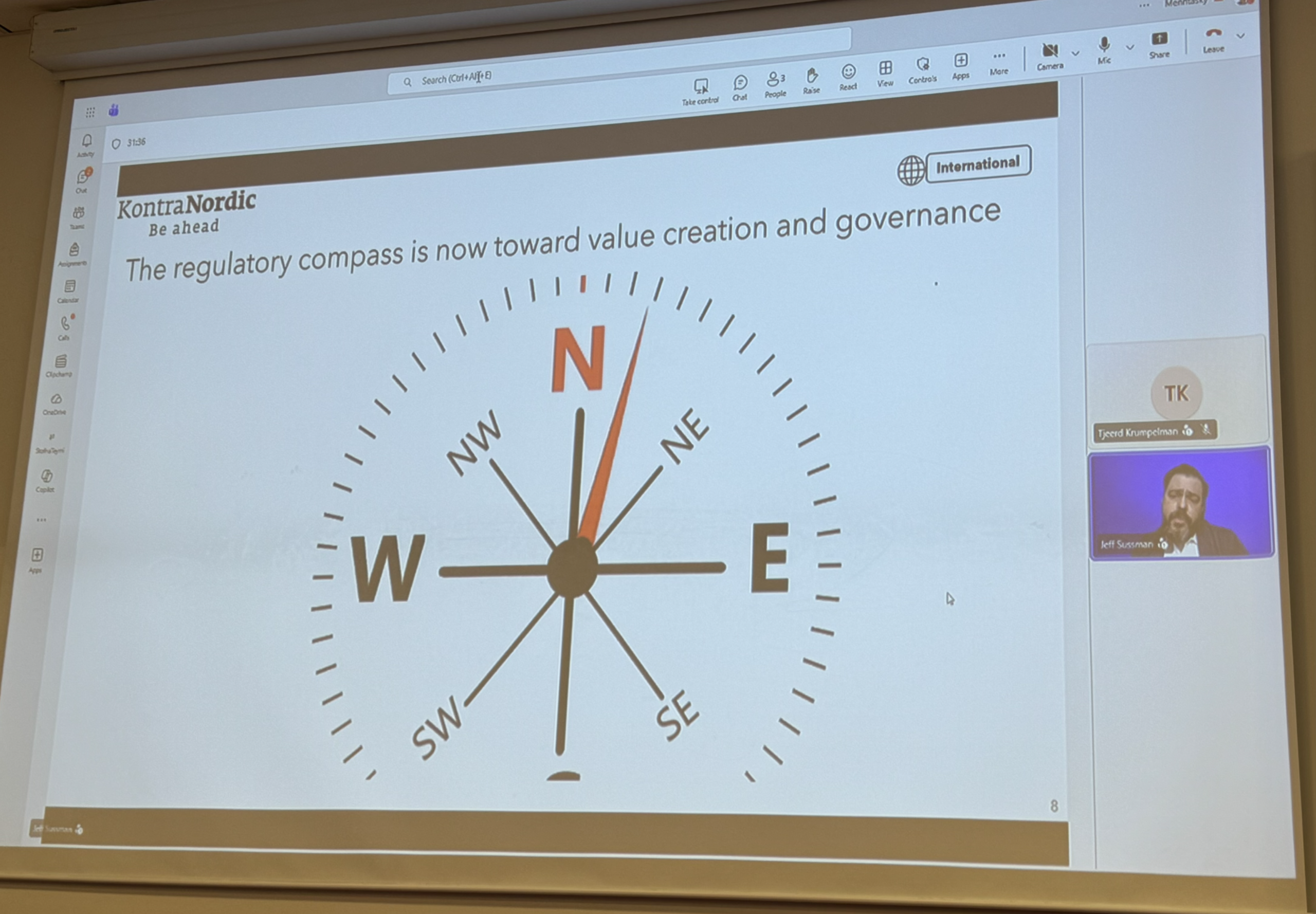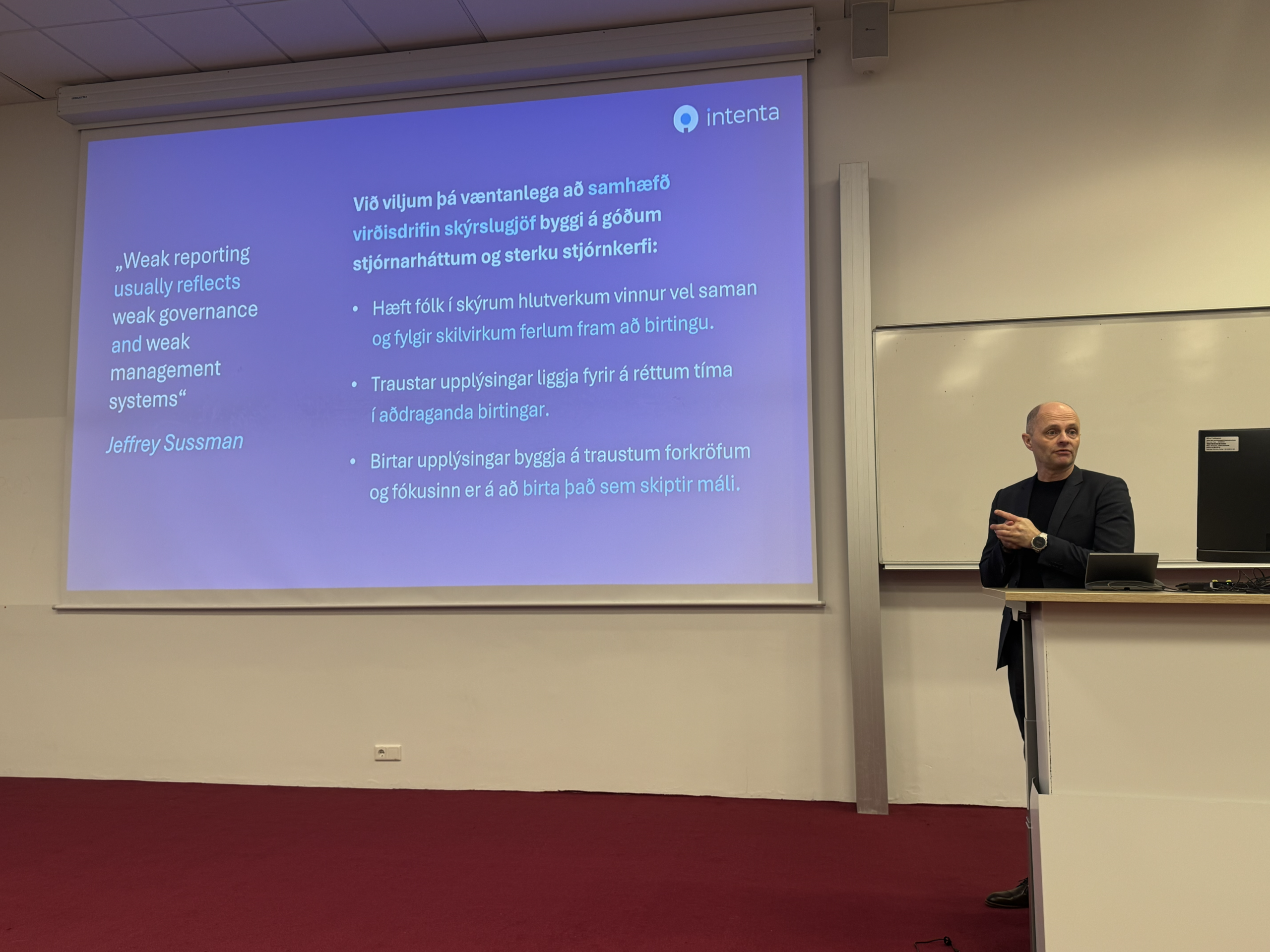


Last week, Jeffrey Benjamin Sussman joined Tjeerd Krumpelman from Grant Thornton Impact House and Sigurður Hjalti Kristjánsson from Intenta at a Stjórnvísi governance event at Háskóli Íslands — part of the Viðskipti og vísindi conference.
The session focused on what the post-Omnibus landscape actually means for Icelandic organisations: new expectations around governance, transparency and verified management information, and the shift from standards compliance towards integrated, value-driven accountability in annual reporting.
One theme ran through the whole conversation: the Omnibus has given many organisations exactly what they asked for. But relief is not the same as resolution.
The governance infrastructure work that CSRD preparation exposed — the gaps in management information, board oversight, strategy-to-performance connection — was never primarily a disclosure problem. It predated the regulation. And it has not been legislated away.
What the Omnibus changes is largely what organisations must explain externally. It does not change what good governance requires internally.
The investors, lenders and procurement bodies driving demand for structured non-financial information have not withdrawn that demand. They have built it into their own processes. The external pressure has changed form. It has not disappeared.
The specific risk now is that organisations which were building towards genuine governance capability use simplification as a reason to pause. The compliance project gets quietly deprioritised. The internal coherence work — the part that would actually make reporting credible rather than assembled — gets deferred along with it.
Governance infrastructure debt accumulates quietly. It shows up later in board packs that cannot answer the questions now being asked directly. In management commentary that describes strategy without connecting it to performance. In leadership credibility gaps when an organisation is asked to explain what it actually knows about its own operations.
The Omnibus is not a reason to stop. It is a reason to reprioritise.
Integrated governance and transparency are now the basic infrastructure of trust. The focus shifts from compliance with standards to coherent, value-driven reporting that boards can stand behind.
Governance before reporting is not a slogan. It is the operating principle behind credible accountability.
— KontraNordic